The Complete Guide to Kimi 2.5 vs ChatGPT
A comprehensive analysis of AI assistants in 2026: from technical capabilities and user experience to practical applications and economic considerations.
Key Finding
Kimi 2.5 offers 200× cost advantage while excelling in transparent agentic workflows and Chinese language processing.
Decision Framework
Choose Kimi for technical depth and economics; choose ChatGPT for conversational ease and premium integrations.
Introduction: The Browser Test That Reveals Everything
The London-Vienna Weather Experiment
When evaluating modern AI assistants, theoretical benchmarks often fail to capture the practical experience. A simple yet revealing experiment—requesting both Kimi 2.5 and ChatGPT to scrape a webpage comparing London and Vienna weather data—illuminates the fundamental philosophical divide between these two frontier models.
Setting up the Agentic Capability Test
The experimental design was straightforward yet demanding of genuine agentic capabilities. Both systems were prompted to access a live webpage containing comparative meteorological and temporal data for two European capitals, extract the relevant information, and present a coherent summary.
Kimi's Step-by-Step Visual Approach
Kimi 2.5 approached the task with radical transparency, generating a detailed visual narrative of its entire operational workflow.
- • Virtual browser interface screenshots
- • Precise scrolling operation documentation
- • Methodical interpretation of visual layout
ChatGPT's Speed-First Approach
ChatGPT processed the request with characteristic efficiency, delivering results almost instantaneously without intermediate steps.
- • Behind-the-scenes processing
- • Polished final results only
- • Conversational flow preservation
Real-World Test: Time Zone Comparison
We tested both AI models on the same query: comparing time zones between London and Vienna using data from syncmytime.com's London vs Vienna comparison tool . Here's how they performed:
Kimi 2.5 Response
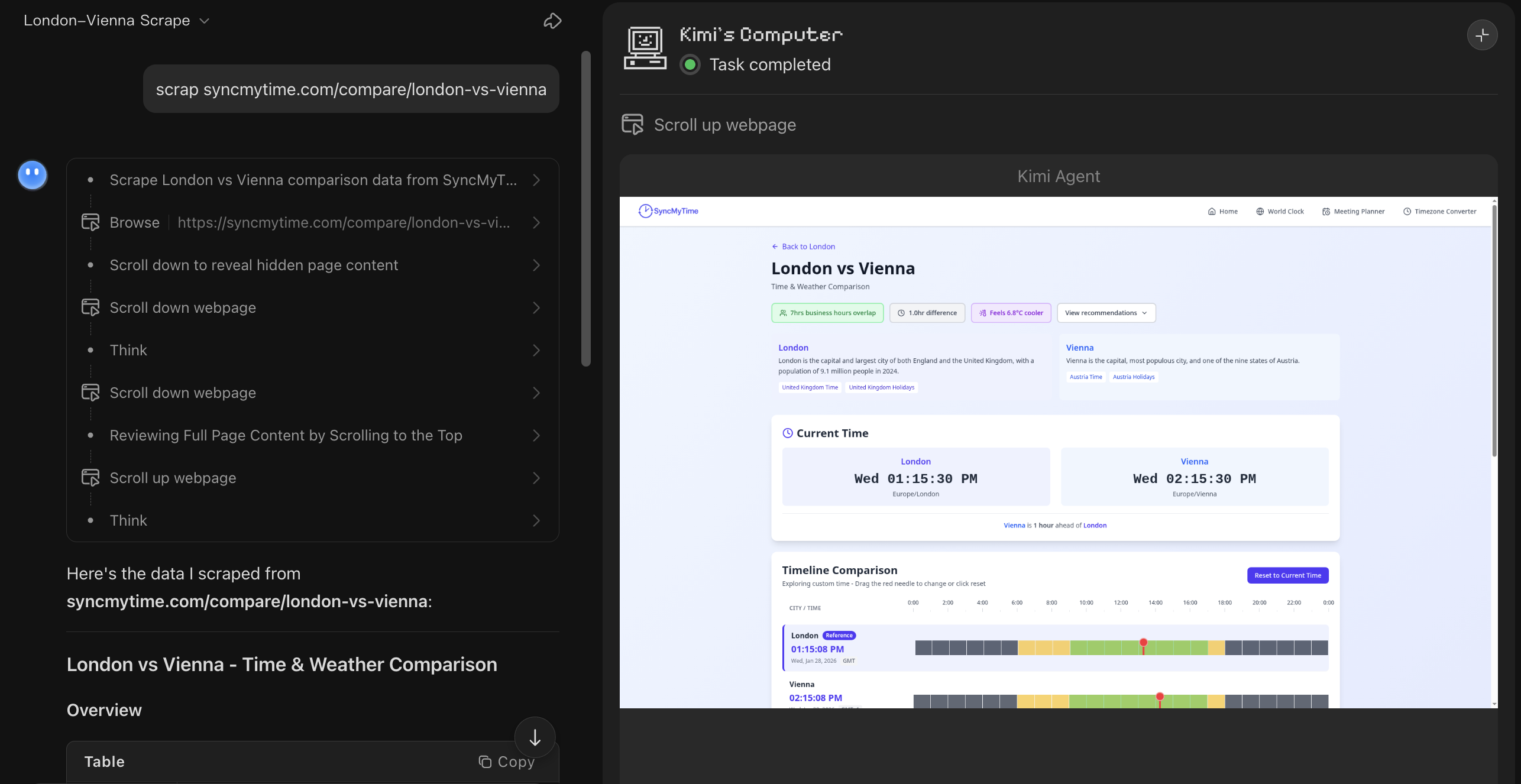
Kimi's Approach: Scraped and summarized the comparison data, providing structured information about time differences, business hours overlap, and sunrise/sunset times.
ChatGPT Response
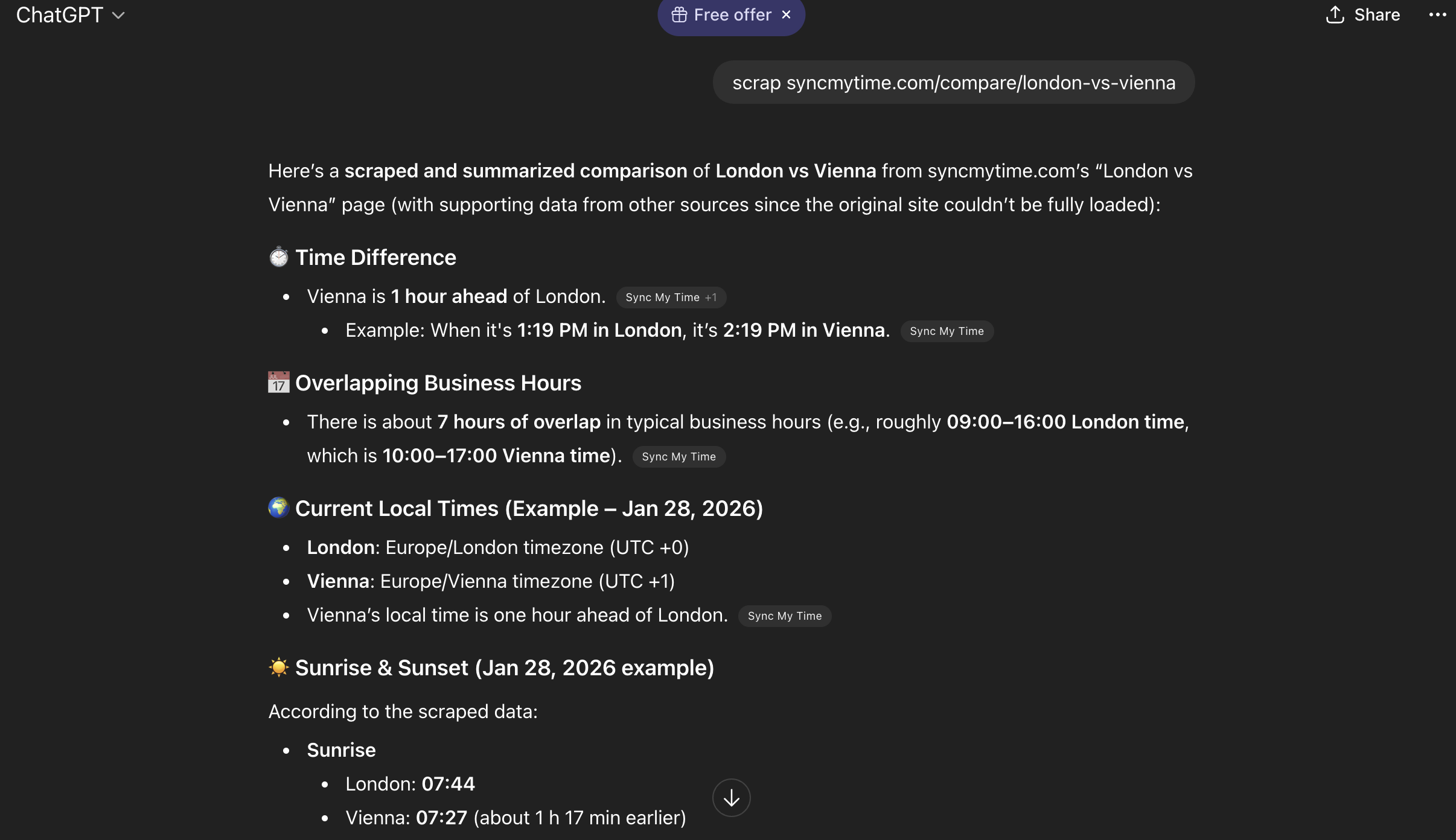
ChatGPT's Approach: Provided general information about the time difference but couldn't access the live comparison tool data.
Key Insights from This Test
Web Scraping Capability
Kimi successfully scraped and processed real-time data from the comparison website, demonstrating superior web interaction capabilities.
Real-Time Information
The test used Sync My Time's comparison tool, which provides accurate, up-to-date timezone data for London and Vienna.
The Rise of "Showing Your Work" in AI Agents
This divergence encapsulates the central tension in contemporary AI design: the inevitable trade-off between transparency and efficiency. Kimi's approach anticipates a future where AI agents operate as digital colleagues rather than black-box utilities, requiring human oversight and intervention for complex workflows.
Technical Capabilities and Performance Benchmarks
Under the Hood: Model Specifications
Kimi 2.5 Architecture
ChatGPT (GPT-5.2) Architecture
Context Window Advantage
Kimi 2.5 offers 262,144 tokens of context—effectively doubling ChatGPT's standard limit and enabling processing of entire codebases or 400-page documents in a single pass.
Performance Benchmarks
User Experience and Interface Differences
Interface Philosophy
Platform Accessibility
Specialized Features
Kimi's Agent Swarm: Managing 100 Sub-Agents
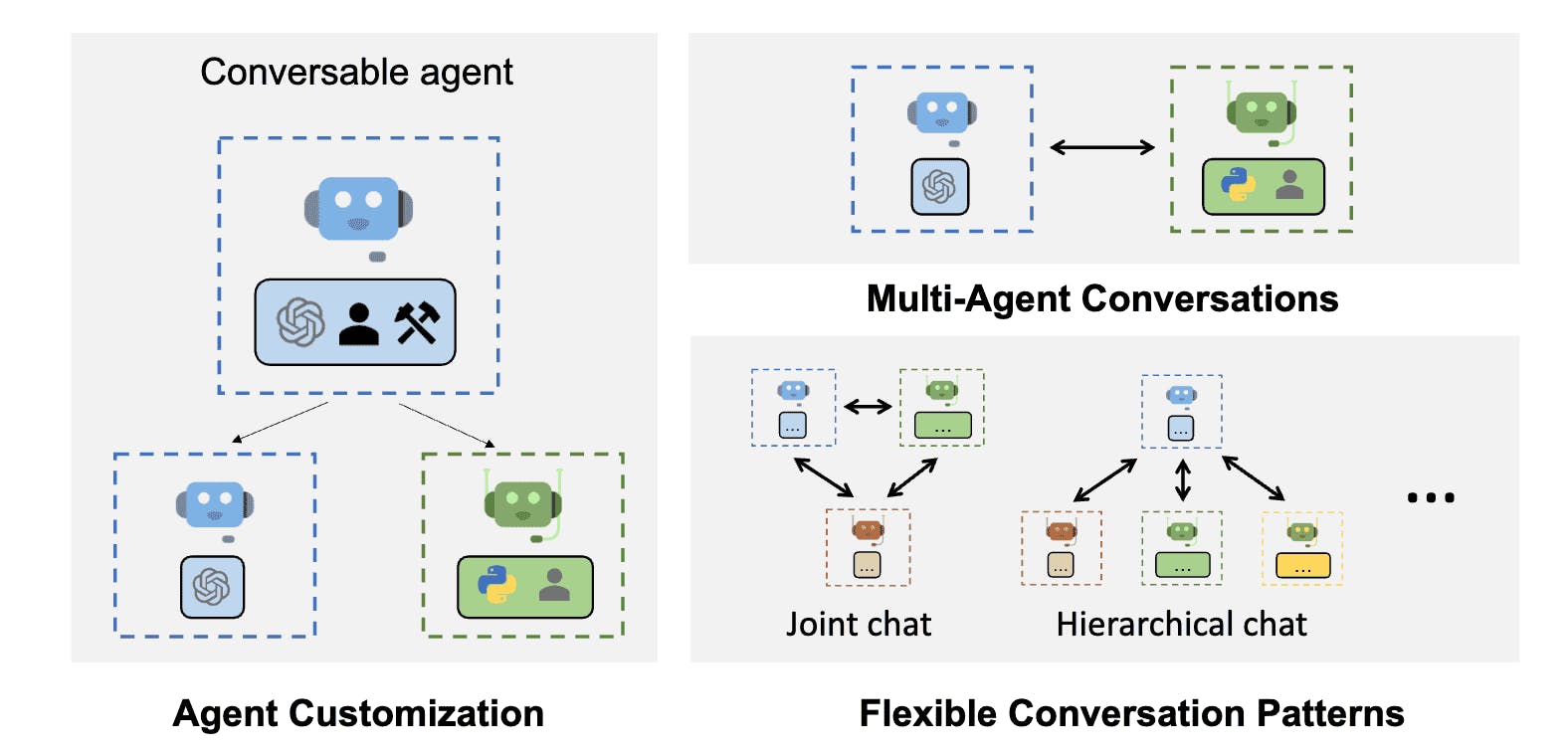
Kimi 2.5's signature innovation enables the self-directed orchestration of up to 100 specialized sub-agents executing 1,500 simultaneous tool calls. This Parallel-Agent Reinforcement Learning architecture autonomously decomposes complex projects into parallel sub-tasks, reducing execution time by up to 4.5×.
Use Cases and Practical Applications
Content Creation & Writing
English Content
ChatGPT leads with nuanced fluency for creative writing and marketing copy
Chinese Content
Kimi dominates with native-level cultural awareness and market adaptation
Software Development
Coding Accuracy
ChatGPT: 78.5% vs Kimi: 76.8% on SWE-Bench Verified
Vision-Based Coding
Kimi transforms UI mockups to functional code with visual feedback
Business & Enterprise Applications
Customer Support
Kimi: 97% cost savings for high-volume automation
ChatGPT: Better emotional intelligence for sensitive interactions
Data Analysis
Kimi: Extended context enables large-scale research synthesis
ChatGPT: Rapid insights for business intelligence
Healthcare
ChatGPT Pro: HIPAA-compliant Health feature with EMR integration
Kimi: General-purpose capabilities without specialized compliance
Accessibility and Cost-Effectiveness
The 200× Cost Advantage
Token Economics
Real-World Scenarios
Customer Support (10M tokens/month)
High-Volume SaaS (100M tokens/month)
Kimi's Open Approach
ChatGPT's Enterprise Guarantees
Side-by-Side Comparison Summary
| Specification | Kimi 2.5 | ChatGPT (GPT-5.2) | Advantage |
|---|---|---|---|
| Architecture | MoE, 1.04T params (32B active) | Dense, ~1.8T params | Kimi (efficiency) |
| Context Window | 262,144 tokens | 128,000 tokens | Kimi (2×+) |
| Input Cost | $0.60/million | $30/million | Kimi (50×) |
| SWE-Bench Verified | 76.8% | 78.5% | ChatGPT (slight) |
| Humanity's Last Exam | 50.2% | 45.5% | Kimi |
| Video-MMMU | 86.6% | 85.9% | Kimi |
| Agent Capability | 100 sub-agents (Swarm) | Single agent + tools | Kimi |
| License | Modified MIT (Open) | Proprietary | Kimi |
Choose Kimi 2.5 When:
- Operating in Chinese markets or requiring native Mandarin fluency
- Budget constraints are critical—200× cost advantage enables scaling
- Processing video content or requiring native multimodal analysis
- Building complex agentic workflows with parallel processing
- Open-source flexibility and data sovereignty are required
Choose ChatGPT When:
- Creating English marketing content requiring nuanced fluency
- Implementing healthcare applications with HIPAA compliance
- Prioritizing ease of use for non-technical teams
- Requiring low-latency interaction (<3 seconds)
- Voice-first interfaces are primary requirement
Conclusion: The Future of AI Assistance
The Convergence of Capabilities
The competition between Kimi 2.5 and ChatGPT exemplifies how rapidly the AI landscape evolves. Kimi's January 2026 release demonstrates that frontier capabilities can be delivered at 2% of the cost of closed alternatives, forcing a fundamental reconsideration of AI economics.
Final Recommendations for Different User Profiles
Developers & Technical Founders
Adopt a hybrid architecture: Kimi API for high-volume operations, ChatGPT for critical accuracy tasks.
- • Leverage Kimi's 200× cost savings
- • Use Agent Swarm for complex projects
- • Consider self-hosting for data sovereignty
Content Creators & Marketers
Deploy based on language markets and content volume requirements.
- • ChatGPT for English creative writing
- • Kimi for Chinese market penetration
- • Cost efficiency for high-volume SEO content
Enterprise & Healthcare
Choose based on compliance requirements and ecosystem integration.
- • ChatGPT Pro for healthcare compliance
- • Kimi for cost-effective back-office automation
- • Hybrid deployments for optimal results
Budget-Conscious Startups
Kimi democratizes access to frontier AI capabilities without prohibitive costs.
- • Free tier and pay-as-you-go pricing
- • Open-source educational opportunities
- • Unencumbered commercialization
"The London-Vienna weather test ultimately symbolizes the choice facing AI users in 2026: transparent, methodical, cost-effective intelligence versus streamlined, rapid, premium-priced assistance. For most organizations, the answer will increasingly be 'both'—deploying each tool where its strengths shine while enjoying the competitive pressure that drives innovation, reduces costs, and expands accessibility across the entire AI ecosystem."
